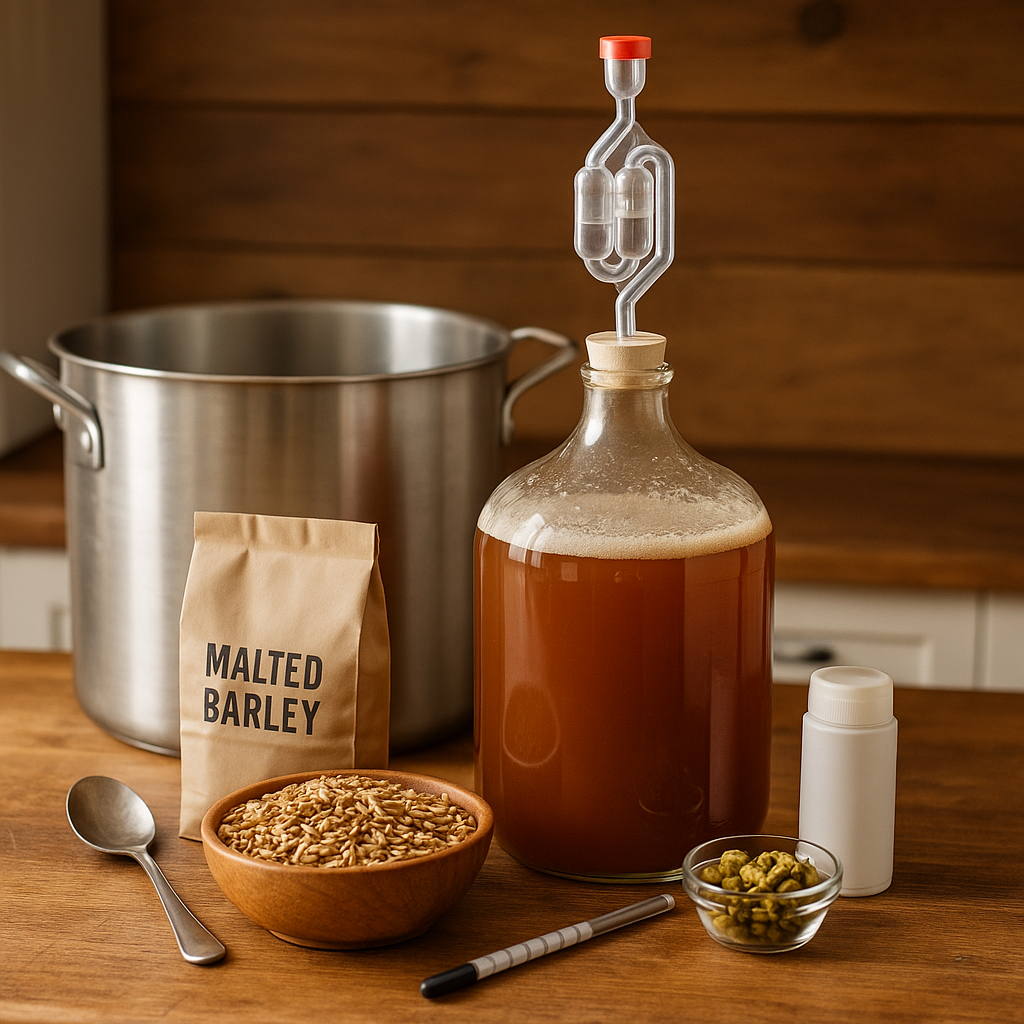
Have you ever dreamed of pouring a beer you brewed yourself? It’s easier than you think! Making beer at home is a mix of cooking, science, and a bit of fermentation magic. You don’t need a lab or expensive equipment—just curiosity, some patience, and a love for learning.
Here’s a simple step-by-step guide to brewing your first homemade beer without complications.
🧪 What Is Beer?
Beer is the result of fermenting sugars from grains (mainly barley malt) using yeast. The yeast converts those sugars into alcohol and bubbles (CO₂). Hops add bitterness and aroma. That’s it: malt, water, hops, and yeast.
🧰 What You Need to Start
Ingredients (for 4–5 liters):
- 1.2 kg crushed malt (or liquid malt extract to simplify)
- Hops pellets (20–30 g depending on the style)
- Brewer’s yeast (dry, ale type like Safale US-05)
- Drinkable water (chlorine-free)
Basic Equipment:
- A large pot (5–7 liters)
- A fermenter with lid and airlock (a water jug with a modified cap works)
- A thermometer
- A large strainer or brewing bag
- Bottles and caps for bottling (recycled bottles work fine)
🧯 Step by Step: How to Brew
1. Mashing (if using grains)
- Heat 4 liters of water to about 67 °C.
- Add the malt and let it rest for 60 minutes (like making a tea).
- Strain the grains and keep the liquid (the wort).
💡 Using malt extract? You can skip this and go straight to the boil.
2. Boiling
- Bring the wort to a boil and add hops at different times:
- Start (for bitterness)
- Midway (for flavor)
- End (for aroma)
- Boil for 60 minutes, then cool as quickly as possible.
3. Fermentation
- Transfer the wort to a clean fermenter and add the yeast.
- Seal it with the airlock and let it ferment at a steady temperature (18–22 °C).
- After 7–10 days, fermentation should be done (no more bubbles, dryer taste).
4. Bottling
- Add a small amount of sugar (to carbonate) and bottle the beer.
- Cap the bottles and let them sit for 2 weeks at room temperature.
5. Enjoy!
- Chill it, open carefully, and pour your first homemade beer.
- You did it! And nothing tastes better than that first sip.
🍺 Best Style to Start With
We recommend a pale ale or a blonde ale—easy, balanced, and forgiving for beginners. They don’t need fancy techniques or temperature control.
🔍 Pro Tips
- Sanitize EVERYTHING. Cleanliness is crucial.
- Be patient: don’t drink too early.
- Keep notes—you’ll improve every batch.
- If something goes wrong, don’t give up. It’s part of the journey.
What’s Next?
Once you master your first recipe, you can start experimenting: swap hops, add fruit, brew a stout or IPA, or even try wild fermentation.
Ready to turn your kitchen into a mini-brewery?
Your first beer awaits. And trust us—the second one is even better.